


Ensure your projects meet building regulations with our comprehensive built environment testing solutions. At Coltraco Ultrasonics, we specialise in advanced airtightness testing and leak quantification to help you achieve compliance with stringent standards. Our cutting-edge ultrasonic technology provides precise and reliable measurements, identifying potential issues that could compromise your structures’ safety, efficiency, or energy performance. By partnering with us, you gain access to expert insights and state-of-the-art tools that support your commitment to quality and regulatory adherence, ensuring your buildings are safe, sustainable, and up to code.
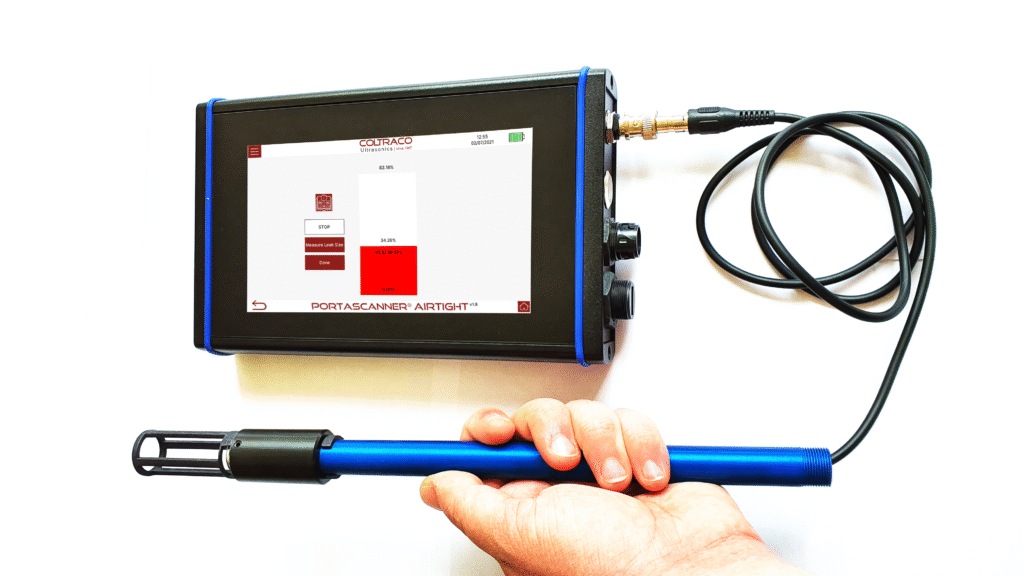
Portascanner® AIRTIGHT is our most advanced ultrasonic tool for room integrity testing in the Built Environment. Developed in part with research and development funded from Innovate UK and in line with our commitment as a member of Innovate UK’s Net Zero Cohort, we proudly offer Portascanner® AIRTIGHT to the global market as a shining example of British innovation and invention to support sustainability. Ensuring unparalleled airtightness, this device precisely locates and quantifies even the most minor leaks, and it can perform data analysis to present these results as precise indicators of a room’s airtightness. This allows for quick and highly accurate testing, making it ideal for construction, maintenance, and medical applications.
Clean indoor air should be a fundamental commitment, ensuring everyone has access to pure, fresh air as a fundamental human right. Achieving this requires an airtight building as the foundation for energy-efficient mechanical ventilation and effective air filtration. Any unwanted air infiltration or leakage through gaps or cracks compromises the integrity of air filtration and purification processes and increases the energy consumption of air handling units.
Liquid resources are transported in pipework worldwide – it is imperative that these resources reach its destination efficiently and without contents loss.
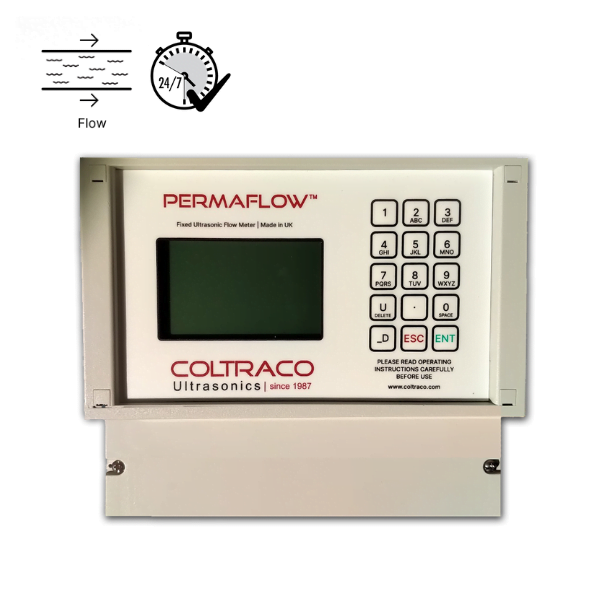
Our Permaflow® is a constant monitoring solution which uses ultrasound to monitor flow rate within pipes. Furthermore, this makes the Permaflow® perfect for chilled water transportation, allowing operators to detect energy loss through temperature and contents loss through leaks simultaneously. The system accepts PT100 thermometer inputs, allowing temperature of your liquid to be monitored simultaneously. Two PT100 thermometers can be installed in order to monitor supply and return temperatures, commonly used in heating and chilling efficiency calculations. Moreover, our Permaflow® system is equipped with datalogging allowing for the tracking of flow rate, and therefore liquid resource usage, over time. This is vital in ensuring systems which still rely on fossil fuels do so in the most efficient manner and do not use more than what is absolutely necessary.
Traditional fire suppression systems use liquified gases, most commonly CO2, to protect valuable assets such as data, marine vessels and crucially prevent injury and death. As is becoming increasingly clear, greenhouse gases such as CO2 are causing severe effects the worlds environment and climate. Our solution is to offer instruments to make alternative, cleaner suppression agents safer to test and monitor.
Our Portagas® is one such instrument, designed to monitor the contents loss of inert-gas fire suppression systems. Inergen™, a common inert gas fire suppressant, has a CO2 fraction of only 8% – with the necessary steps this would allow the fire suppression industry to decarbonise by up to 90%. With the Portagas®, we aim to make this reality safer and more secure by enabling companies to switch to Inergen™, or similar clean agents, with the confidence that they can spot leaks and monitor suppressant usage.
Furthermore, we are in the process of designing a fixed solution using the same technologies as the Portagas®. This new project will be equipped with the same fundamental contents loss detection with the additional security of constant monitoring. This means technicians and engineers will be alerted when the contents of their inert gas fire suppression systems begin to exhibit signs of even the smallest failure, therefore allowing for predictive maintenance to take place before the possibility of a critical failure.
Maintaining accurate oil levels is essential for the reliable operation of a switchgear, a crucial component used in power stations worldwide. Traditional methods, such as dipsticks, are time-consuming and have potential limitations in accuracy. We are offering a non-invasive ultrasonic solution which has been shown to surpass traditional methods in reliability and ease use – introducing the Portatank®.
We have already had success with this approach with our Unison Contracting Services Limited, a key contractor for Aurora Energy – a major Australian power network. On 9th July 2024, a training and trial session was conducted at Unison’s workshop in collaboration with Aurora Energy. The session was led remotely by Coltraco Ultrasonics’ technical team where the Portatank® was used to successfully identify oil levels in a plethora of common switchgear models used by power networks.
As the worlds fossil fuel resources diminish, focus must turn to alternative forms of power which do not rely on these finite fuel sources. Representing one of the most rapidly expanding sectors within the power generation industry, wind power uses large blades to mechanically turn a turbine, producing electricity. These mechanical components are unfortunately prone to overheating and subsequent ignition. Fire represents the second largest loss of wind turbines globally.
Wind Turbine fires commonly start within the nacelle, specifically at one of three critical points: converter and capacitor cabinets, the transformer, or the brake. The nacelle brakes, in particular, generate significant friction and heat, and any mechanical fault can easily lead to a fire. The situation is exacerbated by the nacelle’s construction from highly flammable resin fibreglass and internal insulation that can be contaminated with oil deposits, which add to the fire’s fuel load. Even a small fire can quickly escalate under these conditions.
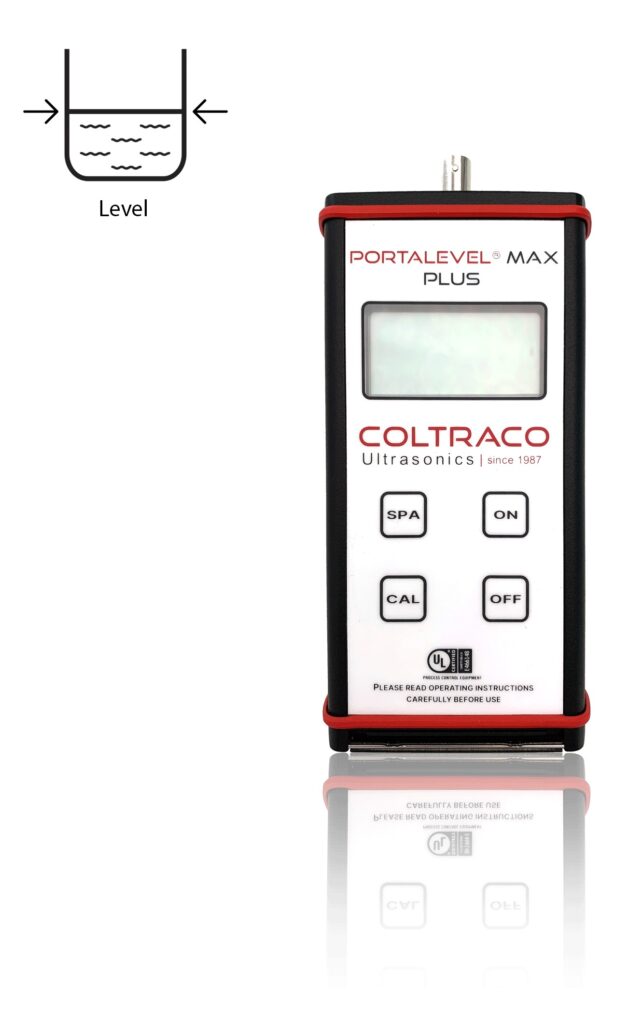
In 2017, Vestas (the second largest wind turbine manufacturer globally) sought a reliable solution to inspect the fire system cylinders installed in their turbines. They collaborated with Coltraco Ultrasonics and conducted trials and testing at their headquarters. The Portalevel® MAX (PLUS) proved a practical solution, enabling regular inspection and maintenance of fire extinguishing systems. Today, Vestas uses Portalevel® MAX (PLUS) for individual turbines, ensuring their fire suppression systems are consistently monitored and maintained.
We are an integrated research-to-manufacturing organisation, comprising the company, its national research institute, the Durham Institute of Research, Development, and Invention and several specialised research centres, led by the Centre for Underwater Acoustic Analysis for the Royal Navy.
Coupled to our manufacturing facilities and research laboratories is our Services Division, which provides bespoke research, product design, and engineering solutions across all Technology Readiness Levels (TRLs), spanning electronics, sensor design, and complete end-to-end product development; electromagnetic, quantum, and acoustic research; systems and information engineering; analytical monitoring; and AI testing and development.
Have a challenge that you need help with? Ask us for a consultation meeting, we are eager to provide bespoke, innovative solutions to your problems.
We are proud to announce that we are winners of the sixth round of the Clean Maritime Demonstration Competition (CMDC). The project for the Advanced Contents Monitoring of Ammonia Fuel Tanks is funded by UK Government through the UK Shipping Office for Reducing Emissions (UK SHORE) programme in the Department for Transport (DfT), United Kingdom. This project integrates wireless communication and non-invasive sensors, including ultrasonic liquid level sensors, to monitor ammonia levels in storage tanks, providing real-time data on fuel levels, tank conditions, and detecting potential leaks or inconsistencies caused by sloshing effects – important for ensuring both operational and environmental safety.
Meet both operational needs and strict regulatory requirements with our continuous monitoring technology. Unlike traditional invasive methods, our device installs externally and alerts operators when refrigerant loss exceeds calibrated thresholds, such as 10% or 50lbs. It’s a smart, hands-off solution for facilities aiming to avoid fines and reduce the emission of harmful refrigerants.
Why? In the UK, operators are legally required to reduce leaks of fluorinated greenhouse gases with fines up to: £100,000 for non-compliance £200,000 for actual HFC leakage. With increasing pressure to phase out HFCs and transition to alternative refrigerants, we offer the ideal tool for compliance and for operators navigating this journey into cleaner refrigeration.