Coltraco and DIRDI help public bodies, industry and strategic partners assess whether AI-enabled systems are safe, reliable, measurable, governed and ready for operational deployment.


We are proud winners of the Queen’s Award for Enterprise in International Trade, in both 2019 and 2022.
Many AI systems fail because the data, measurement layer, operational assumptions or human decision process around the model have not been tested with sufficient rigour.
AI is strategically vital to the UK’s economy and national security. Our AI Test & Evaluation services aim to help to establish a robust, transparent, and adaptive framework to support their adoption, for strategic advantage.
For consequential applications, AI should not be treated as a substitute for rigorous engineering. Its value depends on assured sensing, signal interpretation, calibration, physics-informed validation and responsible governance.
AI systems, once deployed with fixed goals, may perpetuate specific values and power structures indefinitely resulting in cascading errors in safety-critical or socio-technical settings.
AI will be foundational to future economic growth, national security, and global influence, but it is advancing rapidly in other fields and poses a growing threat to domestic security, shipping, aviation, and UK interests overseas if not properly tested.
AI is strategically vital to the UK’s economy and national security. Our AI Test & Evaluation services aim to help to establish a robust, transparent, and adaptive framework to support their adoption, for strategic advantage.
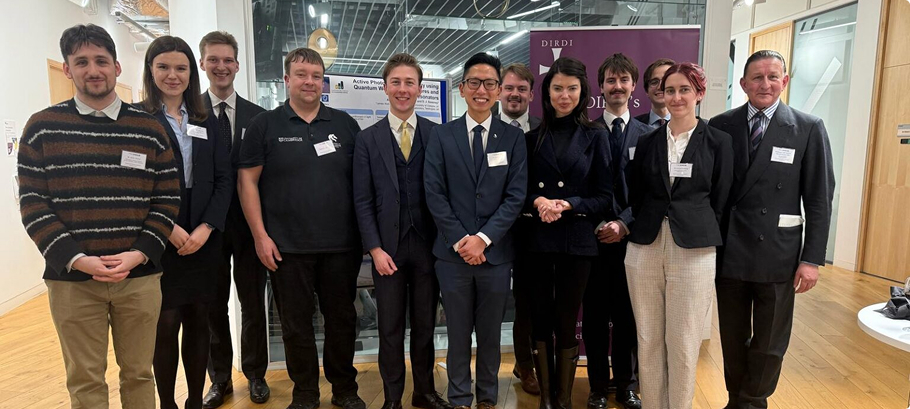
Our work combines Coltraco’s engineering and measurement experience with DIRDI/SPAIG’s academic, mathematical, strategic and policy expertise.
A structured assessment of whether an AI use case is suitable for pilot, procurement, further development or deployment.
Bespoke evaluation plans for model behaviour, uncertainty, reliability and performance under realistic operational conditions.
Assessment of the physical and informational foundations on which an AI system depends.
Structured testing to identify vulnerabilities before deployment in operationally sensitive environments.
Controls for acceptable autonomy, human approval, auditability, fallback conditions and accountability.
Support from problem definition through to pilot design, implementation planning and standard rollout blueprints.
A practical route from initial uncertainty to tested, governed and deployable capability. Our process includes:
The purpose of assurance is to support decisions. Each engagement produces clear, usable outputs for technical, operational and senior decision-making audiences.
You’ll receive an:
Speak to Coltraco and DIRDI about testing, evaluating or safely deploying an AI-enabled system in a high-consequence operational environment.