
Counterfeit Fire Suppression Agents: A Hidden Maritime Safety Risk
The integrity of fixed fire suppression systems is fundamental to maritime safety. While regular inspections often focus on cylinder weight, pressure and servicing records, these indicators alone may not reveal whether the extinguishing agent itself is genuine.
A recent incident aboard an LNG carrier demonstrated how Coltraco Ultrasonics’ Portalevel® LITE helped identify a counterfeit Novec® 1230 fire suppression agent that had passed conventional weight checks but failed further investigation.
The Portalevel® range was specifically developed with the capability to assist in identifying counterfeit cylinders and unauthorised marine fire extinguishing agents. Sinking and fire remain the principal reasons for ships being lost at sea, addressing a growing challenge within the global fire safety industry. This capability is enabled through the analysis of key physical constants and their relationship to acoustic behaviour, allowing users to verify characteristics that may indicate authenticity or potential irregularities.
By leveraging advanced ultrasonic measurement technology, the Portalevel® range provides an additional layer of confidence in the inspection and maintenance process to ensure enhanced Safety of Life at Sea (SOLAS), an IMO imperative and something for which Coltraco Ultrasonics have been awarded numerous Safety at Sea Awards over the years. It is one of the key reasons why we are aboard 20% of the entire world’s commercial shipping fleet.
An Unusual Observation During Routine Servicing
During scheduled five-year hydrostatic testing and refilling of a NOVEC® 1230 fixed fire suppression system, service engineers observed unusual behaviour during the discharge process.
Unlike genuine NOVEC® 1230, which typically produces a characteristic white fog-like appearance upon release, the discharged agent behaved differently, raising concerns regarding its authenticity.
While the cylinder’s total weight matched the expected nominal value, further verification was required before the system could be returned to service.
Investigating with Portalevel® LITE
The maintenance team utilised the Portalevel® LITE to verify the liquid level within the cylinder.
Under normal conditions, the ultrasonic measurement clearly distinguishes between the liquid and vapour phases inside a gaseous extinguishing agent cylinder. In this case, however, the readings showed no significant distinction between the liquid level and vapour phase.
Although the overall cylinder weight appeared correct, the Portalevel® LITE results suggested that the internal contents were not behaving as expected for genuine Novec® 1230.
This anomaly prompted further laboratory testing.
Gas Chromatography Confirms Counterfeit Agent
Samples of the extinguishing agent were submitted for Gas Chromatography (GC) analysis.
The laboratory results revealed that the chemical spectrum did not match the expected profile of Novec® 1230. The analysis conclusively confirmed that this particular batch of agent was counterfeit.
Importantly, all other cylinders aboard the vessel were verified as normal through:
- Weight verification
- Portalevel® LITE liquid level measurement
- Portasteele® CALCULATOR verification
- Chemical composition analysis
The combination of these inspection methods enabled the maintenance team to isolate the issue before the system was returned to operational service.
Why This Matters for LNG Carriers
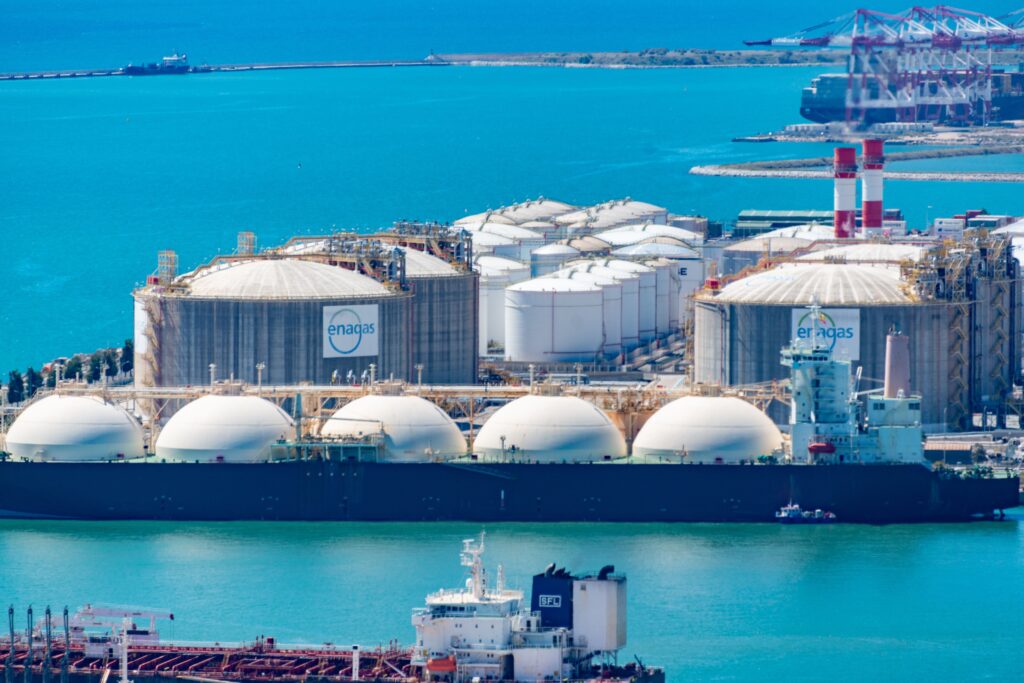
LNG carriers operate in one of the most demanding marine environments in the world. These vessels transport liquefied natural gas at approximately -162°C and rely upon sophisticated engineering systems to safely transport cargo over long distances.
On vessels where operational safety is critical, the reliability of fixed fire suppression systems cannot be compromised. A counterfeit extinguishing agent may possess the correct weight and occupy the expected cylinder volume while lacking the fire suppression properties required during an emergency.
Had this issue gone undetected, a critical safety system could have remained in service without providing the intended level of protection.
Beyond Weight Measurements
This incident demonstrates an important limitation of relying solely on weight-based inspections.
Counterfeit or substituted agents can be formulated to closely replicate the expected cylinder weight, potentially passing standard visual and weight checks. However, differences in physical properties often affect acoustic response within the cylinder.
By analysing these ultrasonic characteristics, Portalevel® LITE provides an additional layer of verification that may reveal irregularities not apparent through conventional inspection methods alone.
Supporting Compliance and Safety at Sea
The ability to identify potential counterfeit or unauthorised extinguishing agents reflects Coltraco Ultrasonics’ ongoing commitment to improving fire safety across the maritime industry.
Through advanced ultrasonic inspection technology, organisations can strengthen verification procedures, support regulatory compliance and enhance confidence in the operational readiness of critical fire protection systems.
This case highlights how Portalevel® LITE, combined with professional technical expertise and follow-up laboratory testing, can serve as an effective frontline tool for identifying anomalies before compromised systems are returned to service.
Conclusion
The discovery of a counterfeit fire suppression agent aboard an LNG carrier serves as a reminder that weight alone does not guarantee authenticity.
While conventional inspections remain essential, Portalevel® LITE provided an early indication that something was wrong, prompting further investigation and ultimately preventing a potentially compromised fire suppression system from remaining operational.
For shipowners, service providers and fire safety professionals, the combination of ultrasonic verification and technical expertise offers a valuable additional safeguard in protecting life, assets and operational continuity.
Request a Portalevel® Demonstration