
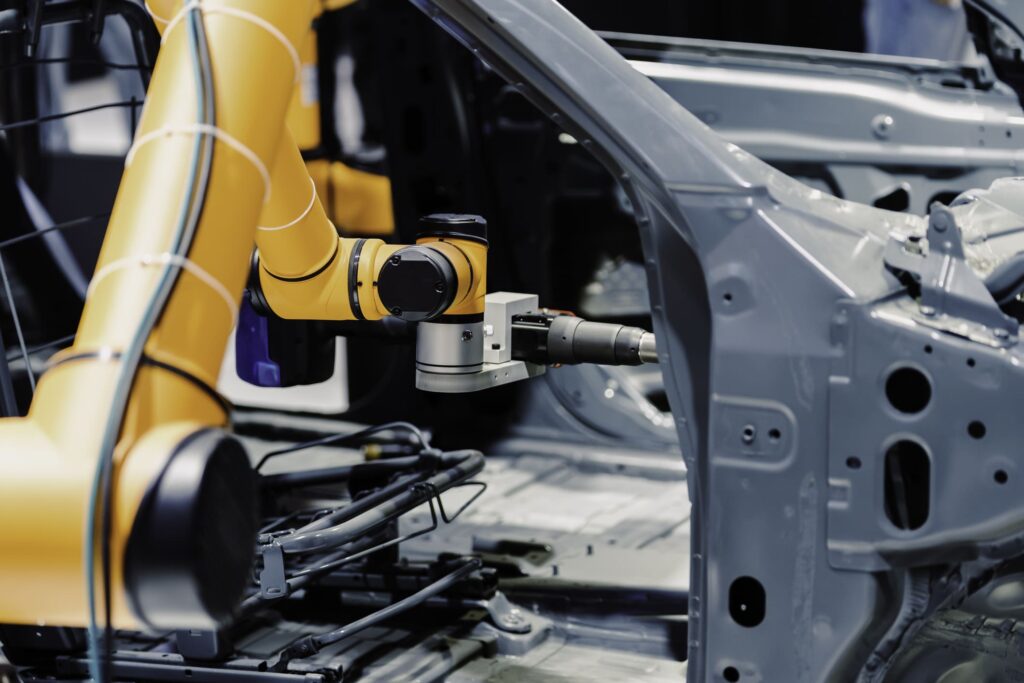
Vehicle airtightness is a vital factor in modern automotive manufacturing. It directly affects sealing performance, cabin conditions, thermal performance, and overall efficiency.
Coltraco is partnering with a major car manufacturer to enhance the measurement of air tightness and leakage in vehicle components.
The project aims to replace traditional leak detection with an ultrasonic system that provides reliable results without water, pressure, or contact-based testing.
Overview of the Development Programme
Coltraco is developing an ultrasonic system to assess airtightness in key vehicle components such as doors, windows, and the cabin enclosure.
The goal is to measure air leakage in a controlled, repeatable manner compatible with production processes. The system is designed for integration into automated manufacturing and potential global deployment.
The Challenge: Limitations of Existing Leak Testing Methods
Most current airtightness tests rely on water or pressure-based systems.
In practice, these methods present several challenges:reparation and handling of water.
- They slow down the production stage and introduce delays.
- They increase energy use and operating costs.
- They are difficult to connect to automated systems.
- They do not support inline measurements.
These limitations make it difficult to maintain consistent, reliable airtightness results at scale.

The Objective: Non-Invasive Airtightness Testing for Production Environments
The manufacturer needed a system that could:
- Detects air leaks without using water or pressure.
- Deliver accurate measurements across multiple vehicle components.
- Operate within high-speed production lines.
- Reduce operational costs and environmental impact.
- Provide confidence in test outcomes.
The system must operate without physical contact and maintain accuracy under varying production conditions.
The Solution: Ultrasonic Airtightness Testing System
Coltraco is developing an ultrasonic system that uses airborne sound to detect leaks in vehicles.
The system generates ultrasonic energy inside the cabin and monitors how it escapes through gaps in seals, including doors, windows, and structural joints.
How the System Works
The ultrasonic airtightness test follows these steps:
- An emitter (~40 kHz) is placed inside the vehicle cabin.
- Ultrasonic sound waves are generated throughout the enclosed air space.
- External sensors pick up sound escaping through leaks.
- The system measures signal differences to identify leakage points.
This enables operators to detect air leaks quickly and accurately without disrupting production.
Core Measurement Principle
The system measures the difference between retained and escaping ultrasonic energy:
- A well-sealed vehicle keeps sound contained within the cabin.
- Air leakage allows sound to pass through cracks or gaps.
- Higher signal levels outside the vehicle indicate greater leakage.
This approach delivers clear, accurate airtightness measurements instead of a simple pass or fail result. designed to meet the demands of modern automotive manufacturing:
- Non-invasive testing with no water, pressure, or contact
- Non-destructive, allowing repeated use
- Fast test cycles aligned with production flow
- Detection across multiple vehicle components
- Compatibility with automated systems
Data Capture and Diagnostic Capability
The system records signal amplitude and other parameters, providing a detailed view of air leakage.
This enables manufacturers to:
- Detect small leaks during production.
- Identify weak sealing areas or developing cracks.
- Compare results across vehicles and batches.
- Improve control of manufacturing systems.
Over time, this data supports improved process control and integration with connected factory environments.
Integration into Automated Manufacturing Environments
The system is designed for use in automated production lines.
This includes:
- Inline testing during assembly
- Use alongside robotic inspection equipment.
- Integration with wider production control systems
The goal is to enhance production flow while maintaining measurement accuracy.
Expected Impact on Manufacturing Operations
Ultrasonic airtightness testing eliminates the need for water-based methods and streamlines the testing process.
This leads to:
- Lower energy use and reduced operating costs
- Fewer delays during production
- More consistent and repeatable results
- Better control over vehicle quality
Strategic Relevance for Automotive Production
Airtightness plays a direct role in thermal performance, heating efficiency, ventilation, and cabin conditions.
Improving how leakage is measured allows manufacturers to:
- Improve overall vehicle performance.
- Reduce energy consumption
- Meet evolving regulations
- Maintain consistent production standards.
This project demonstrates how ultrasonic technology can improve testing methods and support long-term development in automotive manufacturing.
Additional Context and Broader Applications
While this project focuses on automotive applications, the same principles apply to building performance testing, including walls, fire doors, and domestic construction.
In both sectors, air leakage affects energy efficiency, temperature control, and system performance.
Speak to Coltraco About Ultrasonic Testing Systems
Coltraco develops ultrasonic testing equipment for a range of industrial applications.
If you need to measure airtightness, detect air leaks, or improve sealing performance, contact Coltraco to learn how this technology can support your operations.