
Sustainability describes the ability of something to be maintained or persist over time. It is most often used in an environmental context, referring to actions that ensure the long-term health of the planet for future generations. A key aspect of sustainability is managing greenhouse gas emissions, particularly reducing and removing carbon dioxide from the atmosphere (decarbonisation).
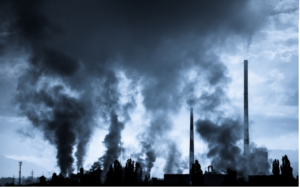
Modern studies estimate that up to 70% of greenhouse gas emissions originate from cities and densely populated areas. As a result, developing more sustainable cities is a major challenge
in achieving a greener planet. Approaches to this often focus on decarbonisation, especially by identifying and reducing energy waste.
Energy waste occurs in many forms, including:
- Leaving electronics switched on unnecessarily
- Inefficiencies in energy storage and distribution
- Poor building design and system performance
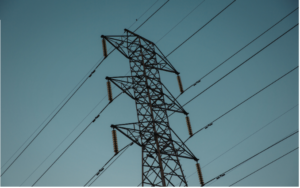
This issue is complex and growing as reliance on technology increases. Wasted energy directly contributes to greenhouse gas emissions, largely because energy generation still depends heavily on
fossil fuels.
Heating and cooling buildings is particularly energy-intensive, accounting for up to 35% of annual energy use. This figure can vary dramatically depending on how energy efficient a building is.
Energy efficiency is controlled by several factors namely:
- Airtightness (allowing heated or cooled air to escape)
- Quality of insulation
- Efficiency of heating and cooling systems
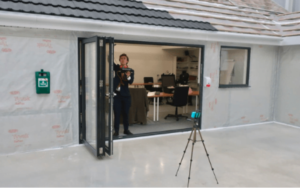
Around 30% of energy wasted in buildings is due to poor energy efficiency, making regular and high-quality testing essential. Even small gaps such as 3mm leaks in windows or doors can increase annual climate control costs by thousands of pounds. Addressing these issues not only reduces energy waste but also lowers operating costs for businesses and households.

Alongside these economic and environmental benefits, stricter regulations on building energy efficiency are being considered. For example, proposed UK legislation would require new homes to produce up to 75% fewer carbon emissions from 2028. While aimed at improving sustainability, such regulations present challenges for builders, business owners, and building managers. To meet these demands, reliable and efficient methods for identifying inefficiencies such as poor airtightness will be essential. At Coltraco Ultrasonics, the aim is to support this need by providing precise, robust, and user-friendly instruments for accurate testing.
Coltraco’s Clean Technologies
Ever since the Industrial Revolution, efforts have been made to reduce environmental harm and mitigate the impact of industry. British industry has played a leading role in this transition, particularly since the Clean Air Act 1956, introduced in response to the Great Smog of London. Since then, British industry has remained at the forefront of sustainability:
- Supported the development and adoption of renewable
energy sources such as solar, wind, and nuclear - Participated in international agreements, including the
Paris Agreement - Remained at the forefront of emerging clean technologies,
particularly fusion and superconductors
Clean technology is now a rapidly growing sector. As of 2025, it represents significant investment across transport, the built environment, and heavy industry, while dominating investment in energy production and storage. This growth also benefits businesses operating in these sectors.
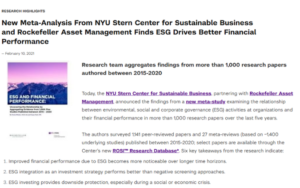
A meta-study by the New York University Stern School of Business found that:
- Nearly 60% of companies focusing on sustainability outperformed financially
- Only 8% showed worse performance
At Coltraco Ultrasonics, we are determined to continue the legacy of sustainable British industry and are dedicated to the global pursuit of sustainability; we are a proud member of Innovate UK’s Net Zero Heat Cohort, working to provide technology to support the United Kingdom’s transition to Net Zero.
Through our range of award winning ultrasonic and acoustic clean technology we can: optimise the energy performance in the built environment, ensure the flow of liquid resources such as chilled water remain efficient and begin to decarbonise the maritime and fire safety industries.
In our engineering and scientific services department, we aim to innovate and develop future technologies. We seek to succeed in commercialising them into bespoke solutions to tackle today’s sustainability challenges. One such product is the Portascanner® AIRTIGHT.
THE PORTASCANNER® AIRTIGHT
“A proven innovation for a greener future” – Wates 2025
Portascanner® AIRTIGHT is our most advanced ultrasonic tool for room integrity testing in the Built Environment. Developed in part with research and development funded from Innovate UK and in line with our commitment as a member of Innovate UK’s Net Zero Cohort, we proudly offer the Portascanner® AIRTIGHT to the global market as a shining example of British innovation and invention to support sustainability.
Ensuring unparalleled airtightness, this device precisely locates and quantifies even the most minor leaks, and it can perform data analysis to present these results as precise indicators of a room’s airtightness. This allows for quick and highly accurate testing, making it ideal for construction, maintenance, and medical applications.
The Portascanner AIRTIGHT is non-destructive and non-disruptive, and is capable of detecting leaks as small as 0.06 mm. This enables fast and accurate assessment of a building’s fabric performance and overall airtightness. The AIRTIGHT captures and analyses data from multiple leak points in a single test, helping to save time and present clear, actionable insights. The built-in camera allows users to map leaks directly onto site images, making identification and repair easier.
Although blower door testing is required in many countries by regulatory services, the AIRTIGHT is ideal for ensuring that structures pass on the first attempt. It also serves as an effective complementary tool after the initial testing period, helping to ensure a building continues to operate as sustainably as possible.
Moreover, it allows for easier use in environments such as healthcare, where setting up blower door tests would require evacuating wards. Key advantages in these contexts include:
- No need to evacuate occupied spaces
- Minimal disruption to operations
- Faster, more flexible testing
This was especially important during the COVID-19 pandemic, where the Portascanner AIRTIGHT was vital for verifying the integrity of negatively pressurised wards. Since its development, the Portascanner® AIRTIGHT has won multiple awards including an Innovate UK grant, the 2022 Queen’s Award for Enterprise and most recently the 2025 Wates GFS Sustainable Technology Award.
The AIRTIGHT also aligns with multiple of the United Nations’ Sustainable Development Goals, namely:
- SDG 3 Good Health & Wellbeing
- SDG 9 Industry, Innovation & Infrastructure
- SDG 11 Sustainable Cities & Communities.