When a tank, pipe, or cylinder is sealed, pressurised, difficult to reach or part of a safety-critical system, checking the liquid level can be harder than it should be. Manual weighing, draining, opening vessels or relying on guesswork can waste time, interrupt operations and increase risk.
A liquid level indicator gives engineers a faster way to confirm what is inside. Coltraco Ultrasonics designs and manufactures portable ultrasonic liquid level indicators that check fluid levels externally through the tank wall, cylinder wall or pipe wall.
Coltraco is a UK manufacturer of ultrasonic and acoustic instrumentation, with decades of experience supporting fire safety, maritime, offshore, industrial, power generation, water treatment, food processing, chemical processing and fluid handling applications.
Need help choosing the right device? Speak to Coltraco Ultrasonics about your tank, cylinder or pipework application.


We are proud winners of the Queen’s Award for Enterprise in International Trade, in both 2019 and 2022.
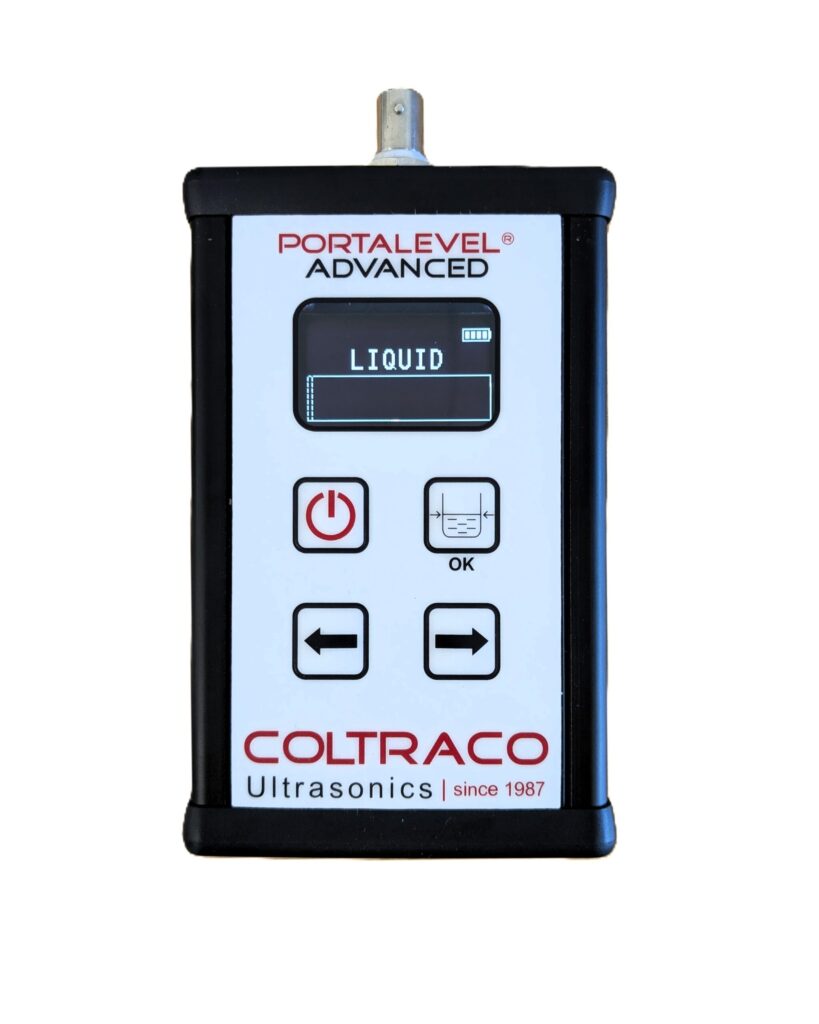
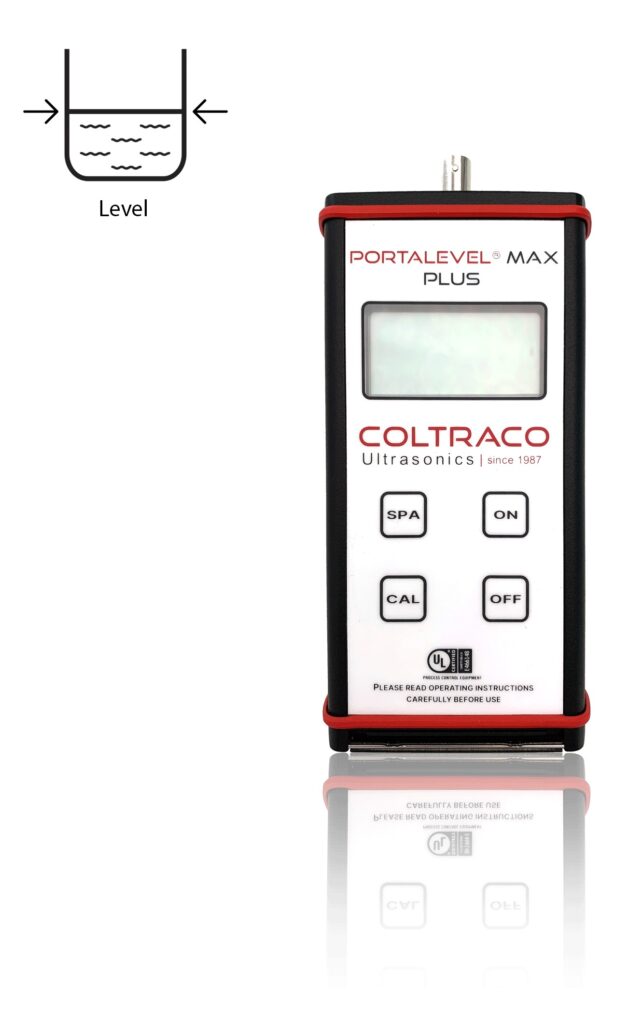
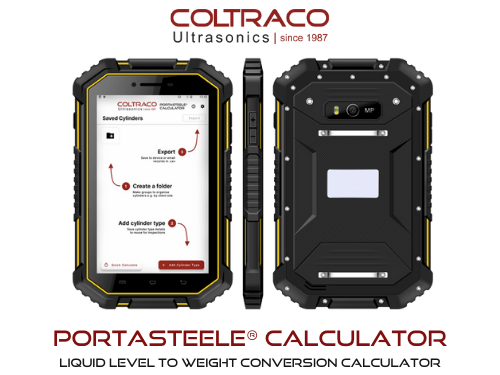
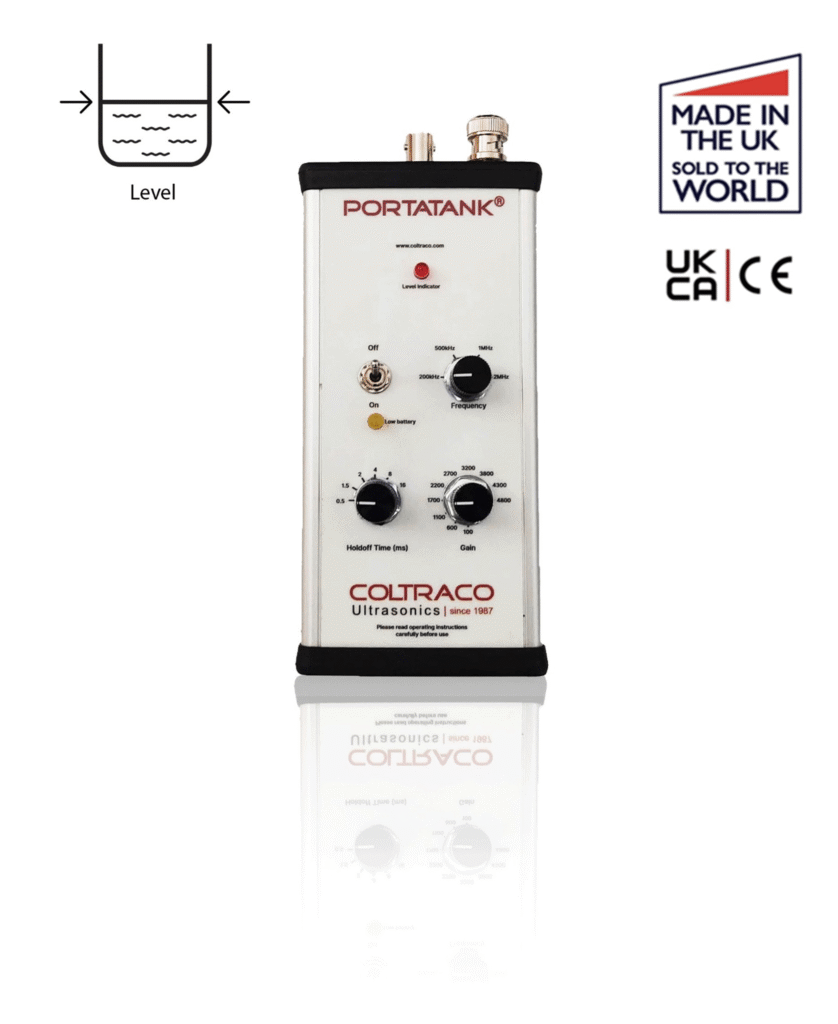
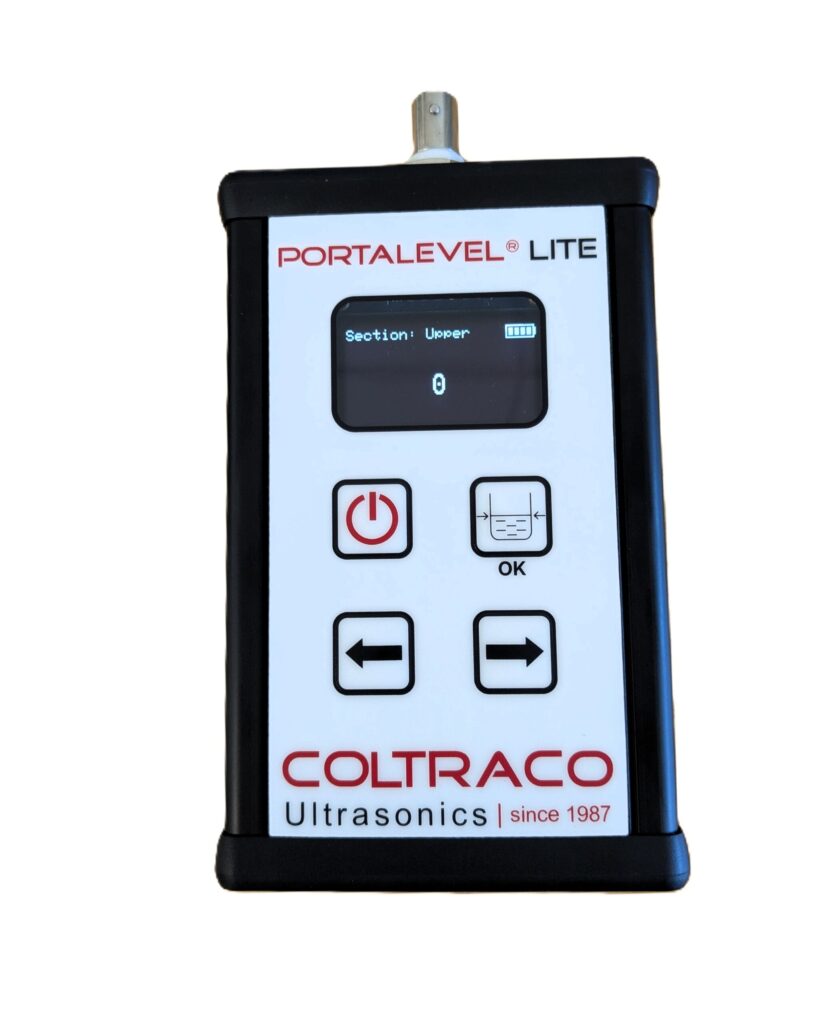
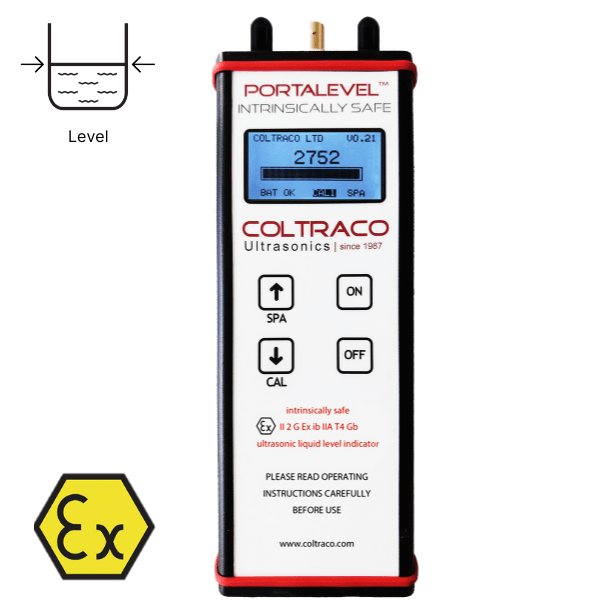
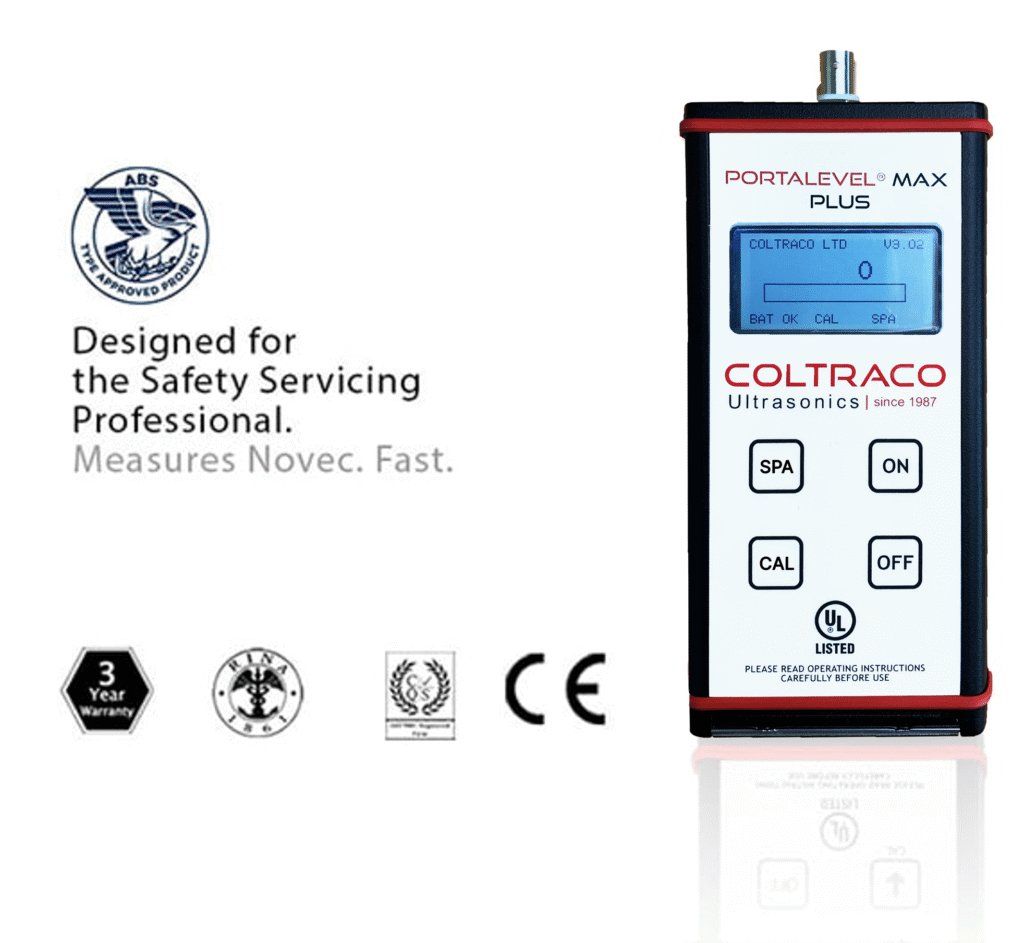
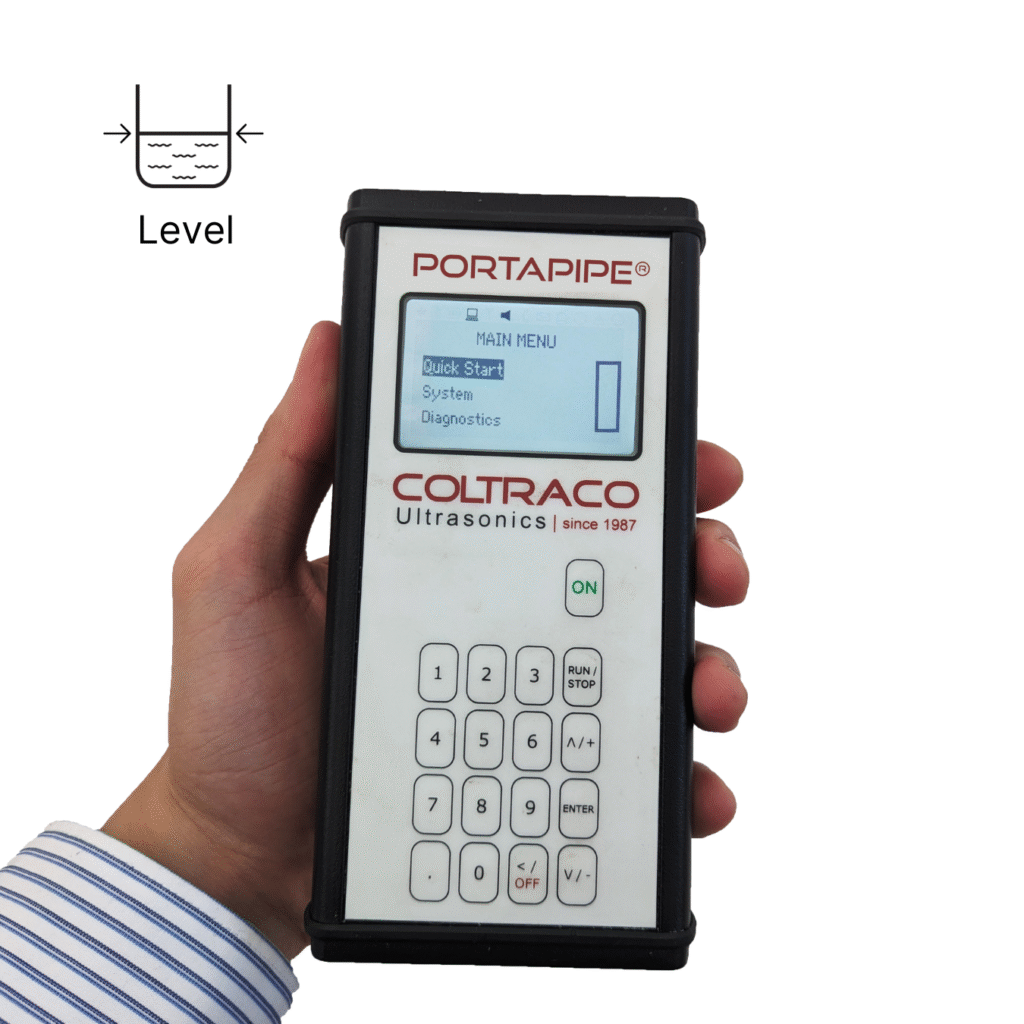

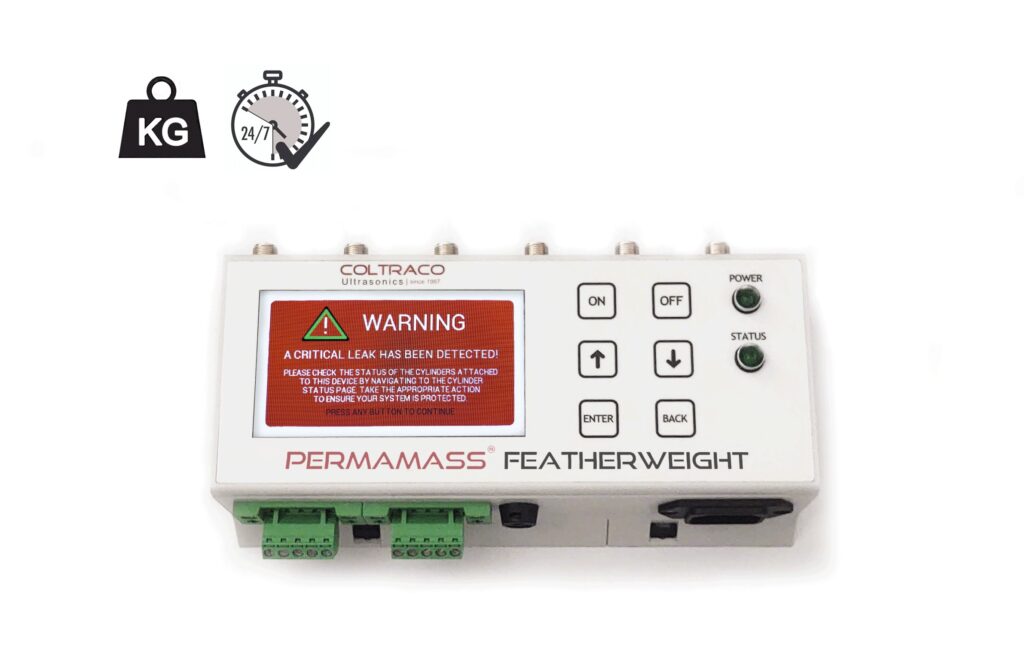
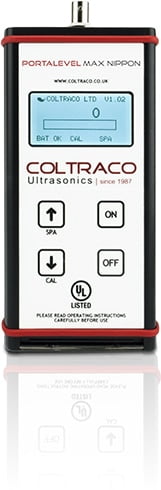
A liquid level indicator is a device used to show or measure the amount of liquid inside a tank, cylinder, vessel or pipe. It helps operators identify where the liquid surface sits, confirm whether enough liquid is present, and check contents without guesswork. Ultrasonic liquid level indicators can work from outside the container without direct contact with the liquid.
This makes them useful when the fluid is difficult to access, hazardous, corrosive, valuable, pressurised or stored inside a sealed system.
An ultrasonic liquid level indicator uses sound waves to detect where liquid is present inside a container.
The operator places an ultrasonic transducer against the outside of the tank wall, cylinder or pipe. The sensor sends ultrasonic waves through the wall. These sound waves respond differently depending on whether there is liquid or gas on the other side.
The device receives the signal and converts it into an electrical signal that helps identify the liquid level. This allows engineers to take accurate readings from outside the container.
In practical terms, this can help users check:
This non-contact measurement method is especially useful where direct access is unsafe, inconvenient or likely to interrupt operations.
The right level indicator depends on what you are measuring, where the liquid is stored and how often you need to check it. A device used for fire suppression cylinders may not be the right choice for chemical tanks, deep tanks or pipework.
| Application | Recommended Coltraco product | Best suited to |
| Fire suppression cylinders | Portalevel® range | CO2, clean agents and liquefied gaseous extinguishing systems |
| Marine CO2 cylinders | Portalevel® MAX MARINE PLUS | Shipboard fire suppression system checks |
| Industrial tanks and vessels | Portatank® | Fuels, oils, coolants, water, wastewater, chemicals and liquid foodstuffs |
| Horizontal or vertical pipework | Portapipe® | Pipe fullness checks, liquid presence and blockage investigation |
| Constant contents monitoring | PermaMass® FEATHERWEIGHT | Fixed monitoring of fire suppression cylinder contents |
| Agent weight calculation | Portasteele® CALCULATOR | Estimating agent weight from measured liquid level |
If you are unsure which product suits your site, vessel or facility, Coltraco can help you compare the options before you buy.
Coltraco’s liquid level indicator range is used by teams that need reliable performance in real inspection conditions.
Typical users include:
The common requirement is simple: they need accurate data without opening, draining, lifting or dismantling equipment unnecessarily.
Some level sensors need to touch the liquid directly. Float sensors, sight glasses, probes and pressure-based devices can be suitable in certain systems, but direct contact is not always practical.
It may be unsuitable when the liquid is:
Non-contact measurement helps avoid those issues. With Coltraco’s ultrasonic liquid level equipment, users can check liquid levels externally, through the tank wall, cylinder wall or pipe wall.
This is useful for chemical tanks, fire suppression cylinders, fuel tanks, oil tanks, refrigerant systems, water treatment assets, liquid foodstuffs and pipework where access is limited.
The benefit is clear: engineers can check fluid levels without disturbing the liquid inside.
There are many types of level sensors, and each has a place depending on the application requirements.
Common options include:
Float sensors can be simple and cost effective, but they normally need to be installed inside the tank or vessel. Pressure devices can work well where the pressure relationship is stable. Radar and ultrasonic level sensors can support continuous level measurement, depending on the system design.
Coltraco’s ultrasonic liquid level indicators are designed for users who need a portable, external method of checking liquid level without direct contact.
That makes them particularly useful for sealed cylinders, various tanks, pipework, corrosive environments and safety-critical applications.
Liquid level measurement is needed across many industries. Coltraco’s range is built around practical inspection problems faced by engineers, surveyors, operators and maintenance teams.
Fire suppression cylinders must contain the correct amount of agent to protect the space they serve. A cylinder may look present and connected, but that does not always prove the correct contents are inside.
A portable ultrasonic liquid level indicator helps engineers check liquefied gaseous agents without removing or weighing the cylinder. This can reduce disruption and make routine inspections easier.
Ships and offshore assets often rely on CO2 cylinders, fuel tanks, oil systems, coolant systems and other liquid storage systems. Access can be restricted, and downtime is costly.
Coltraco’s portable equipment helps teams check levels on board without lengthy dismantling or unnecessary handling.
Chemical processing environments may involve corrosive liquids, chemical compatibility concerns, high temperatures and strict safety controls.
Non-contact measurement is helpful where direct contact with the liquid is undesirable or where opening a tank may create risk.
Water treatment and wastewater treatment sites rely on tanks, dosing systems, pipework and process vessels. Liquid level measurement can support maintenance, capacity checks and process reliability.
A portable level indicator can help teams investigate fluid levels, pipe fullness or changes in contents without taking equipment apart.
Food processing sites may need to measure oils, ingredients, cleaning fluids, liquid foodstuffs or process liquids. Non-invasive level sensing can help reduce unnecessary tank access where hygiene and production continuity matter.
Coltraco Ultrasonics is not a general sensor reseller. It is a specialist UK manufacturer of ultrasonic and acoustic instrumentation for safety-critical and industrial environments.
Customers choose Coltraco because the equipment is designed for practical field use, not just laboratory conditions.
Key reasons to speak to Coltraco include:
Coltraco’s role is to help engineers get accurate readings quickly, without unnecessary dismantling, draining, weighing or disruption. Contact Coltraco Ultrasonics today.