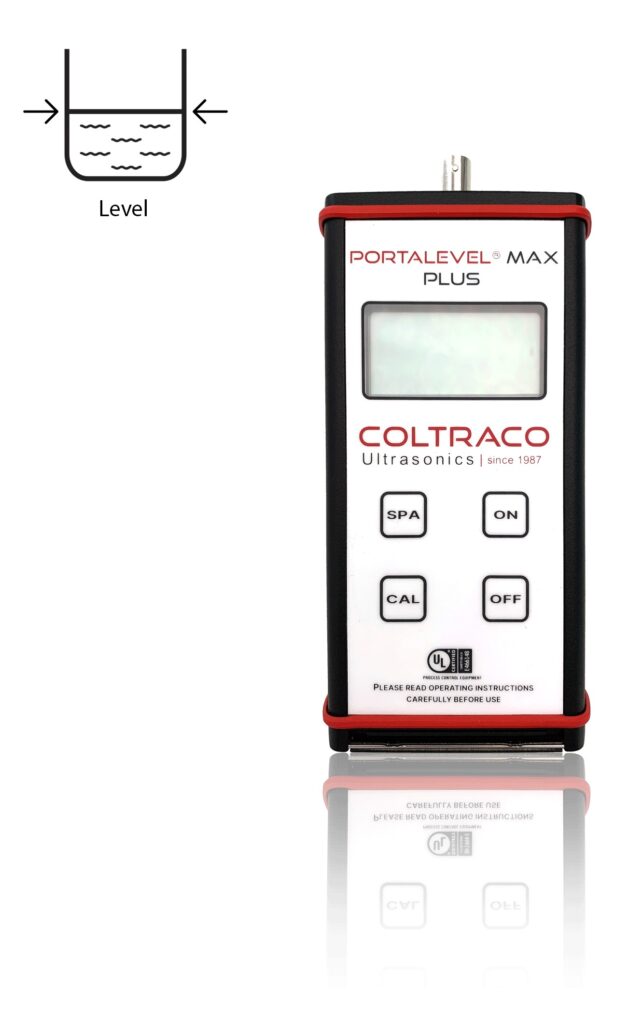
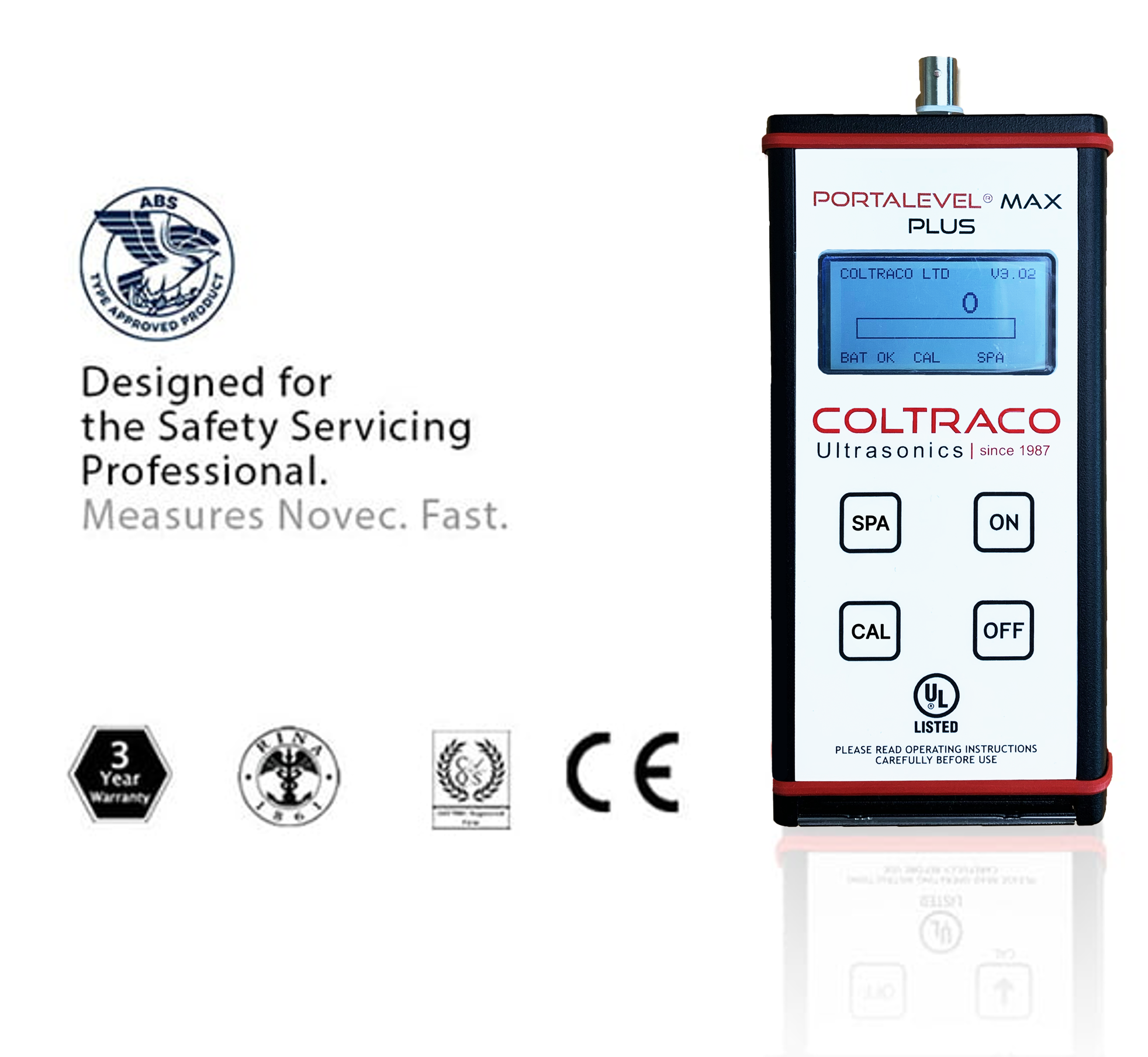
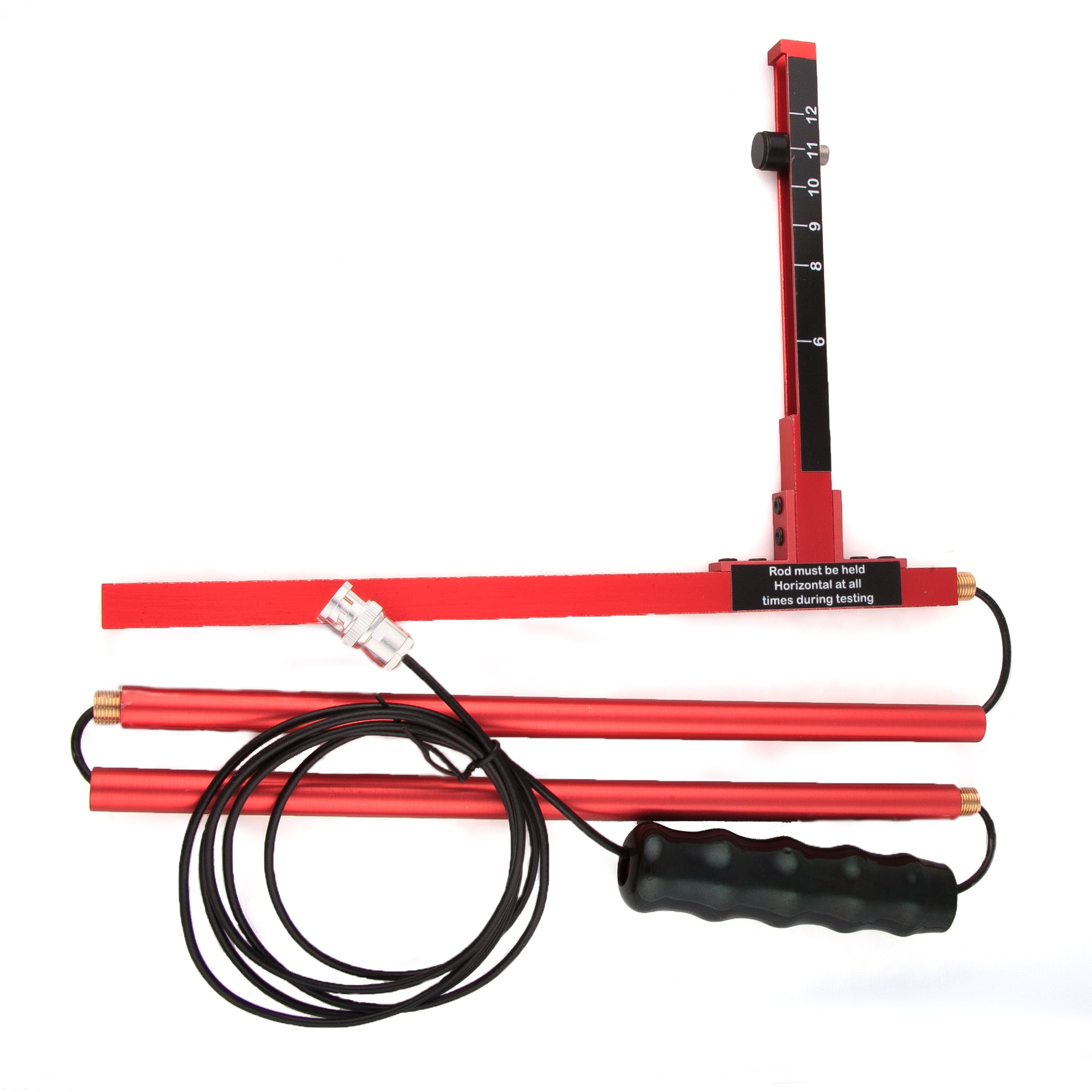
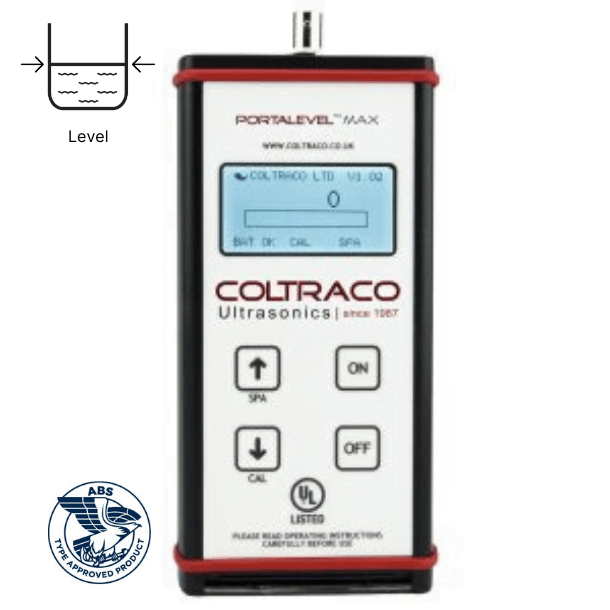
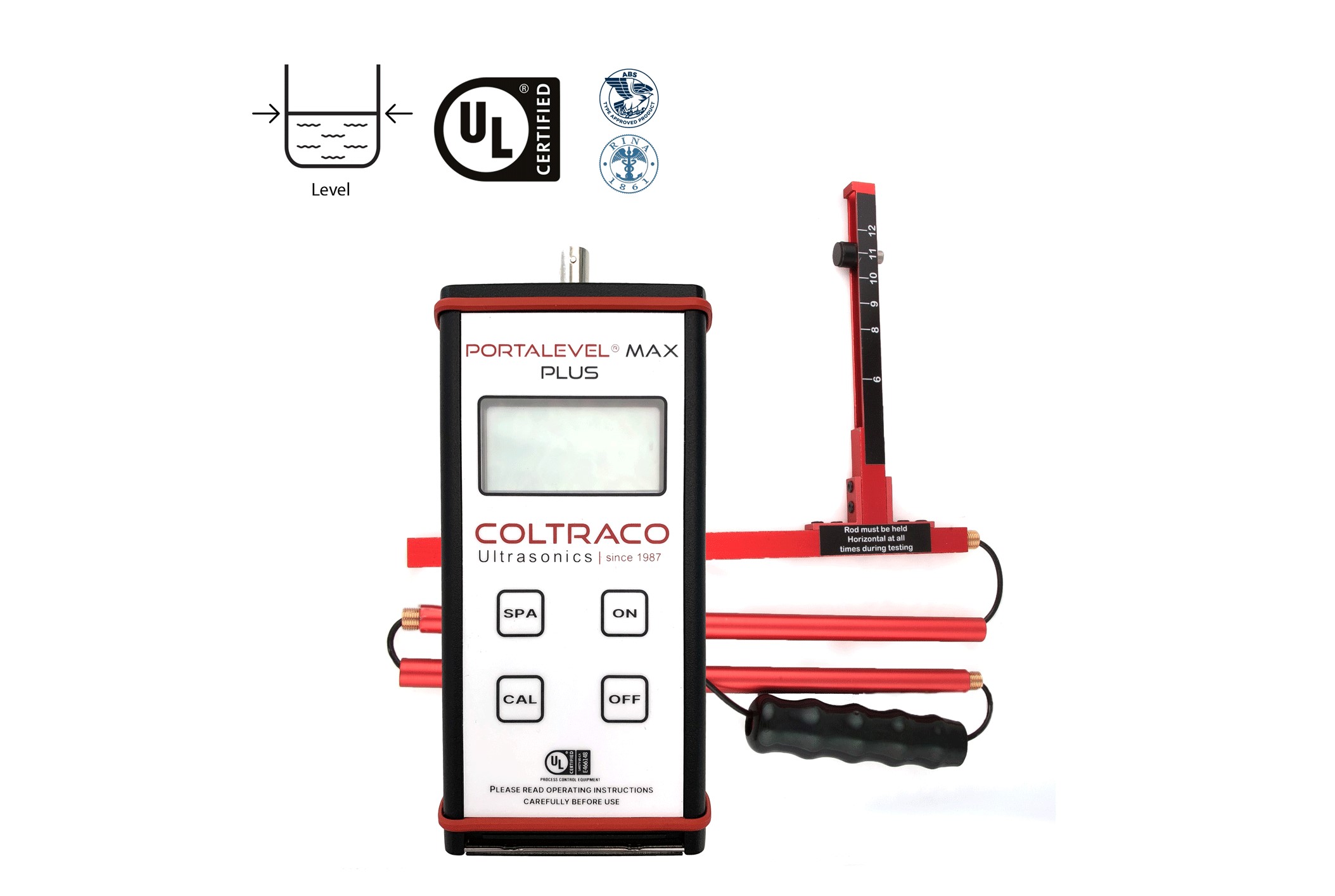
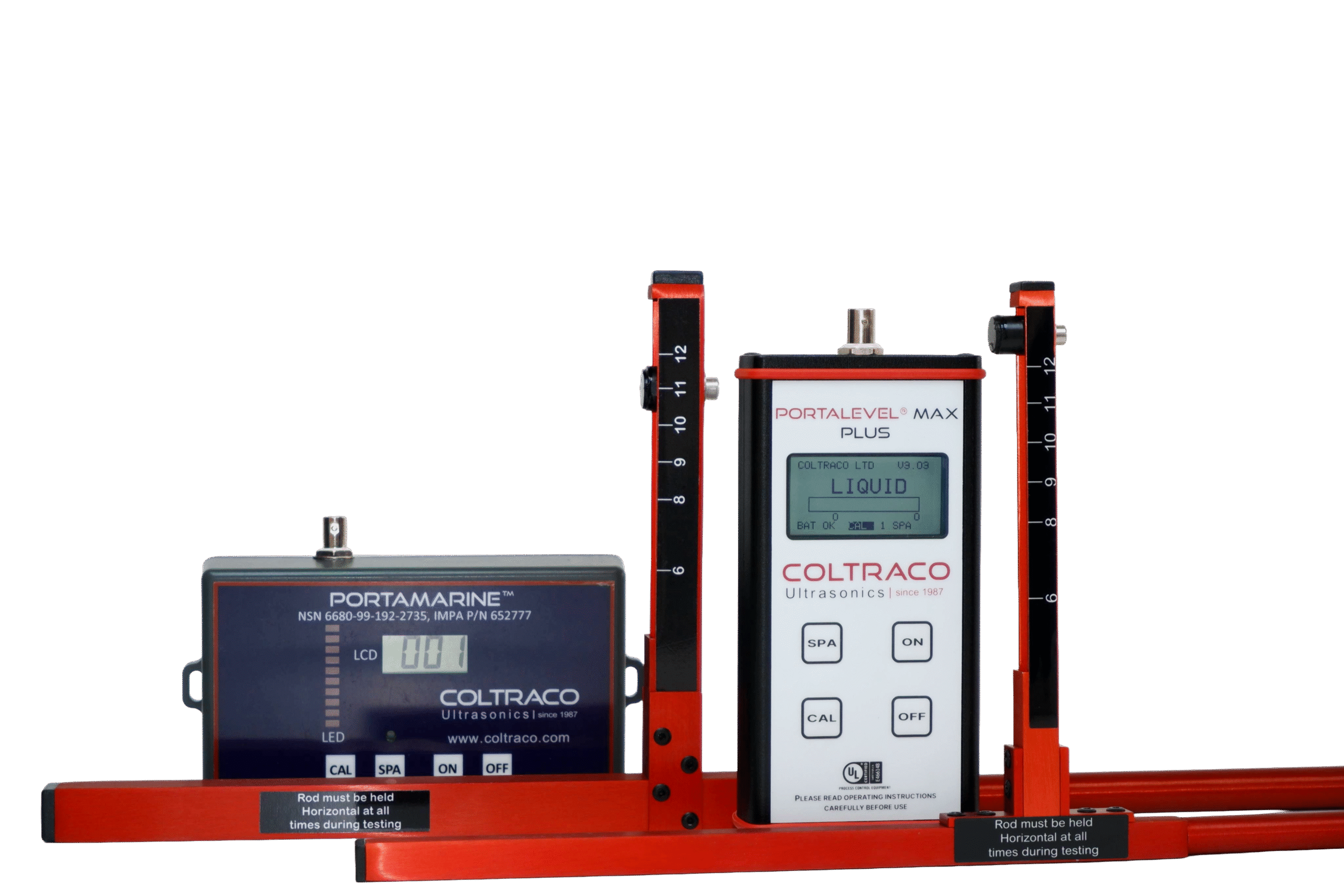
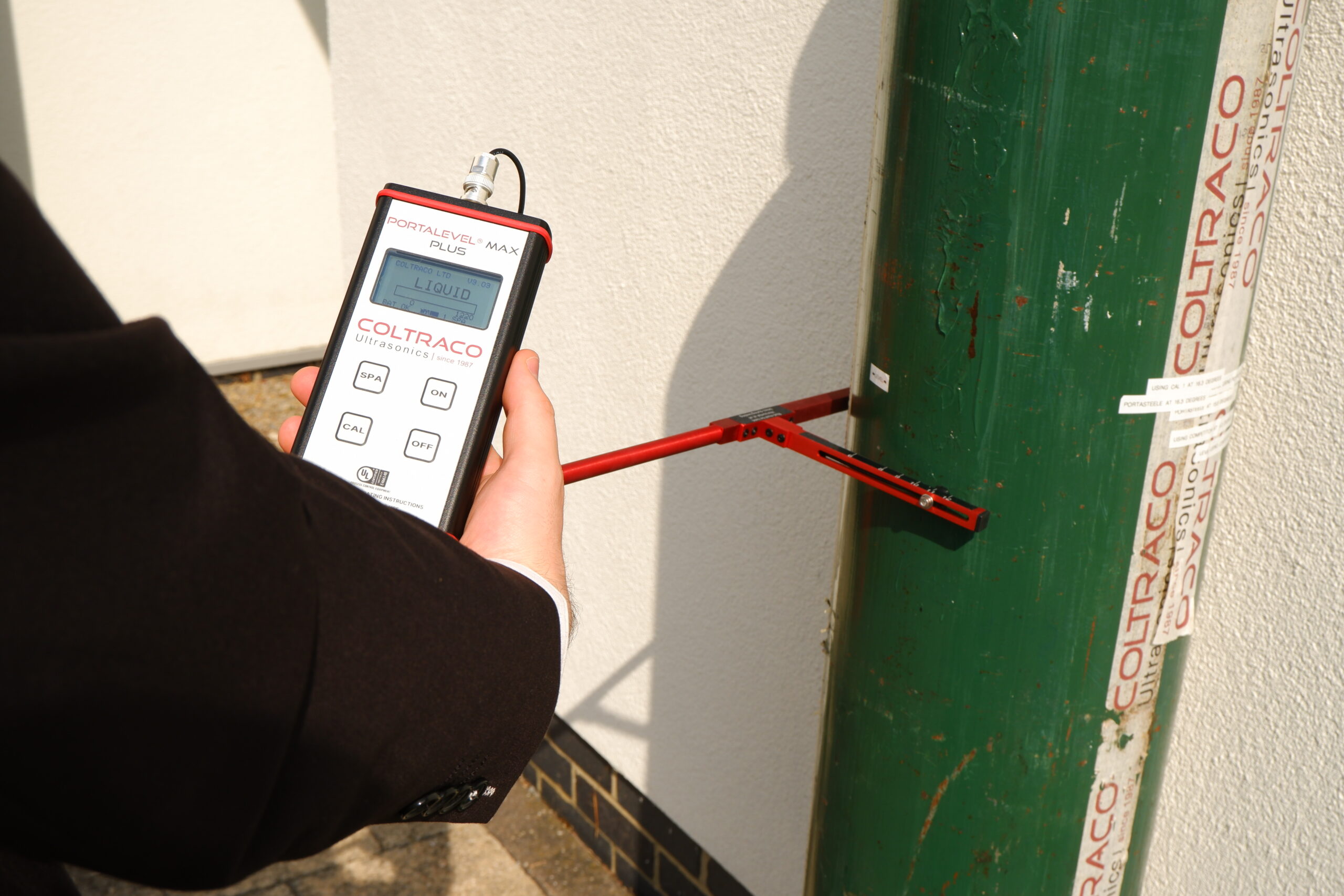
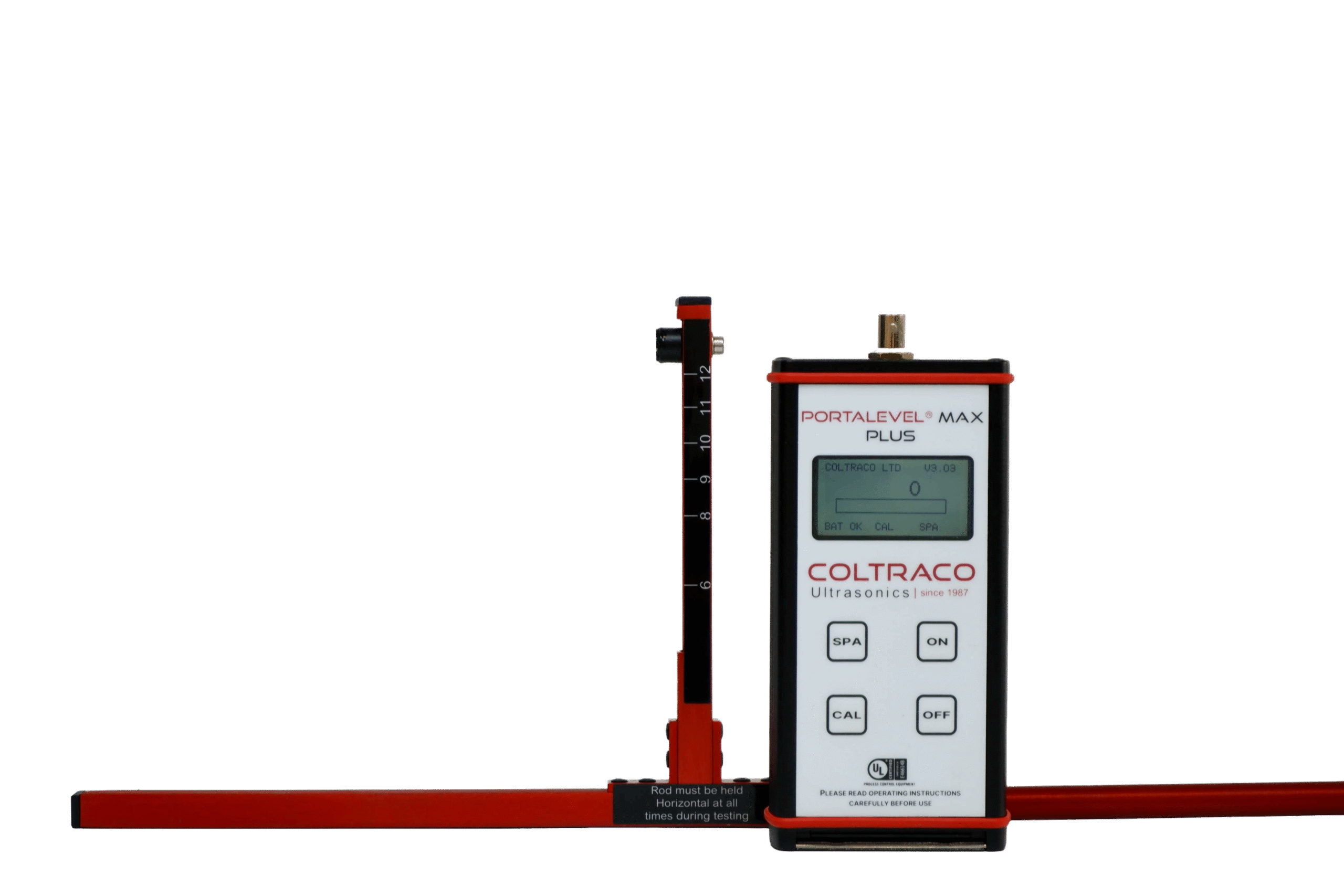
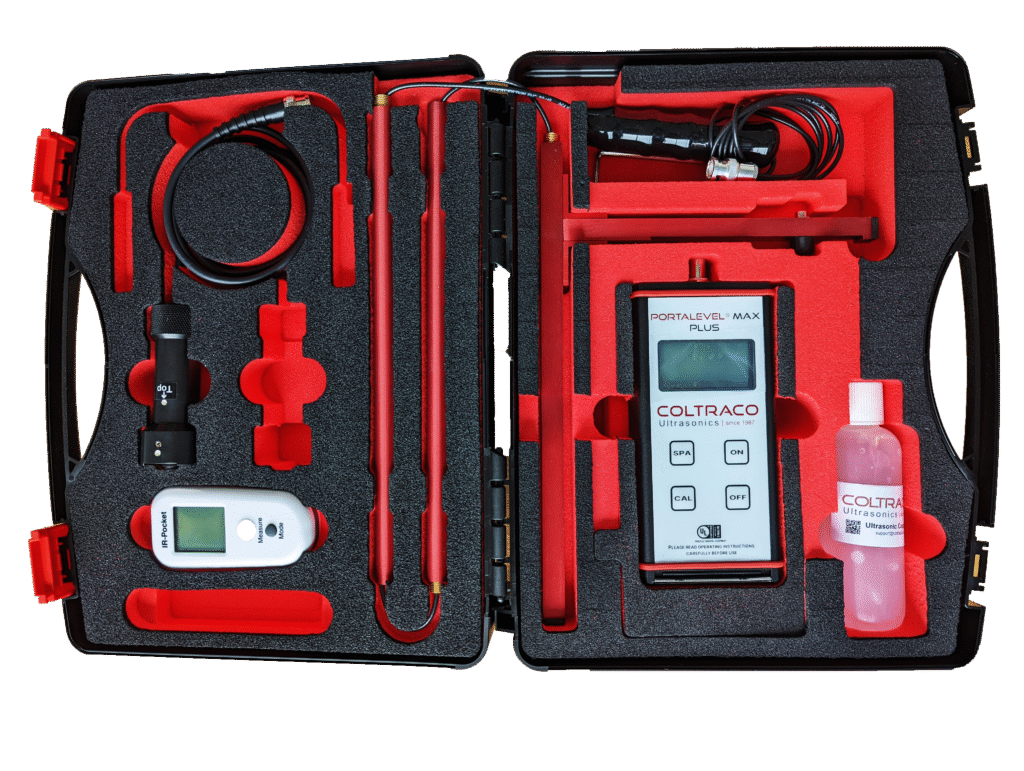
Portalevel® MAX MARINE PLUS is a highly capable, handheld liquid level indicator with ABS Type Approval for marine applications in level monitoring. Portalevel® MAX MARINE PLUS is fast, accurate, and reliable; with a survivable construction and cutting-edge ultrasonic capabilities, it allows an operator to non-invasively monitor the liquid level of almost any CO2, Halon, or Clean Agent fire suppression system at sea.
P/N: 2290334-COMXPSM
NSN: 6680-99-192-2735
IMPA MSG P/N: 652776
CAGE Code: KD983 – COLTRACO LIMITED
Portalevel® MAX MARINE PLUS uses the latest ultrasonic technology to deliver precise and easy-to-use liquid level indication with:
Delivering Safeship®
Fire is the second leading cause of loss of life and property at sea after sinking. Coltraco’s mission, Safeship®, aims to minimise maritime loss through innovative fire safety solutions. Portalevel® MAX MARINE PLUS is a flagship product supporting this mission by improving the safety and efficiency of marine fire suppression systems. Its accuracy, versatility, and ease of use ensure minimal operational impact while enhancing safety aboard marine structures.
Contact Coltraco’s sales team for more information on how Portalevel® MAX MARINE PLUS and Safeship® can be applied to your operations.
| Dimensions |
167x82x30 mm (L x W x D) |
| Unit Weight | 300g (with batteries) |
| Power Supply | 1 x PP3 9V battery |
| Battery Life | 10 hours continuous use |
| Sensor Type | Standard Sensor: 14mm Magnetically Mounted Extension Rod With Sensor: 12mm Sensor, 0.9m Extension Rod |
| Sensor Connectivity | Standard Sensor: 1 m BNC coaxial cable. Extension Rod With Sensor: 2.5m BNC coaxial cable |
| Sensor Frequeny | 1 MHz |
| Operating Temperature | -10 °C to +65 °C (14 °F to 149 °F) |
| IP Rating | IP 65 Enclosure |
| Display | 55 x 28 mm backlit LCD |
| Accuracy | ±1.5 mm (±1/16 inch) |
| Classifications & Approvals | UL Listed, RINA Classification Society Approval, ABS Type Approval |
| Registrations | CE, UKAS, Coltraco is ISO 9001 and ISO 14001 registered |
| Warranty |
|
The Portalevel® MAX MARINE PLUS can measure the level of a wide variety of liquids. The primary application is for checking the liquid level in fire suppression cylinders. These agents commonly include: CO2, FM200™, NOVEC™ 1230, Halon agents, FE-13™, FE-25™, NAF S III™ and, all core Clean Agent systems. However, the Portalevel® MAX MARINE PLUS has been shown to work on other liquids such as water, fuel, LPG and even mayonnaise in the processed food industry.
The Portalevel® MAX MARINE PLUS can identify the liquid level to ±1.5 mm of the actual liquid level. When using the Portasteele® CALCULATOR to convert the liquid level to agent weight, the results are accurate to within 1%.
With the Portalevel® Max Marine Plus, you also get an extension rod that allows you to measure the liquid level in banked cylinders up to four deep.
The Portalevel® MAX MARINE PLUS is one of the most powerful we have developed and works on a large range of cylinder sizes. We have an extensive range of products that can measure anything from 10 cm to over 15 m diameter, so get in touch to find out which unit is suitable for your application.
No, you can use any ultrasonic gel, available in most pharmacies, as well as petroleum jelly. Water will also work, but in hot environment needs very regular application.
No, unfortunately above this temperature CO2 converts into a supercritical fluid state and your cylinder will no longer have a liquid level to measure. We recommend testing CO2 in lower temperatures. Please, get in touch if you need recommendations for hot climate CO2 monitoring.
Yes, however, these agents are far more stable at higher temperatures that CO2, and although the liquid level will naturally rise with increased temperature it is far less than with CO2 and, therefore, can still be tested.
Yes, this unit is specifically designed to work despite the presence of a siphon tube.
The three calibration modes are deigned to offer greater flexibility for the Portalevel® MAX MARINE PLUS to test a wider range of cylinders, despite challenging measuring conditions. CAL 1: This is the standard setting to be used in most cases. This will work when the trend in readings you observe goes from high to low with a large drop-off CAL 2: This mode is to be used when the difference between high and low readings is great, or if CAL 1 is insufficient. CAL 3: This mode is to be used when the difference between high and low readings is small, and/or CAL 1 or 2 is insufficient.