Fire is the second greatest cause of loss of life and property at sea, with the first being sinking. In 2021, a fire broke out in the auxiliary engine room on the Finland registered roll-on/roll-off cargo ship, the Finnmaster. During its departure from England, an incident occurred due to a mechanical failure on one of the auxiliary engines. Fuel leaked from non-standard, unapproved flexible hose onto a hot surface, causing ignition. This incident was exacerbated by the failure of critical safety systems; a fault prevented the emergency generator circuit breaker from supplying power, and the fixed carbon-dioxide fire extinguishing systems failed to fully operate due to defects in the system.
Cargo ship fires can often develop into deep seated fires within the cargo hold, making them extremely difficult for fire service and marine response crews to access and extinguish. Firefighters and rescue service teams rely on functioning suppression systems to support their efforts in controlling such incidents. Effective systems are crucial for enabling crews to respond quickly and safely to deep seated fires at sea.crew’s response, affected by the loss of safety systems, was ineffective.
A ship’s extinguishing system typically comprises of between 200 and 600 cylinders each containing 45KG of liquefied CO2 under high 720 psi/ 49 bar pressure. Due to this high pressure, they are at risk of leaking and accidental discharge. There is a chance of this happening when they are dismantled, weighed and re-installed during their periodic maintenance. Some marine service companies estimate that 20% of a ship’s CO2 cylinders have discharged or partially leaked their contents at some point in their lifetime.
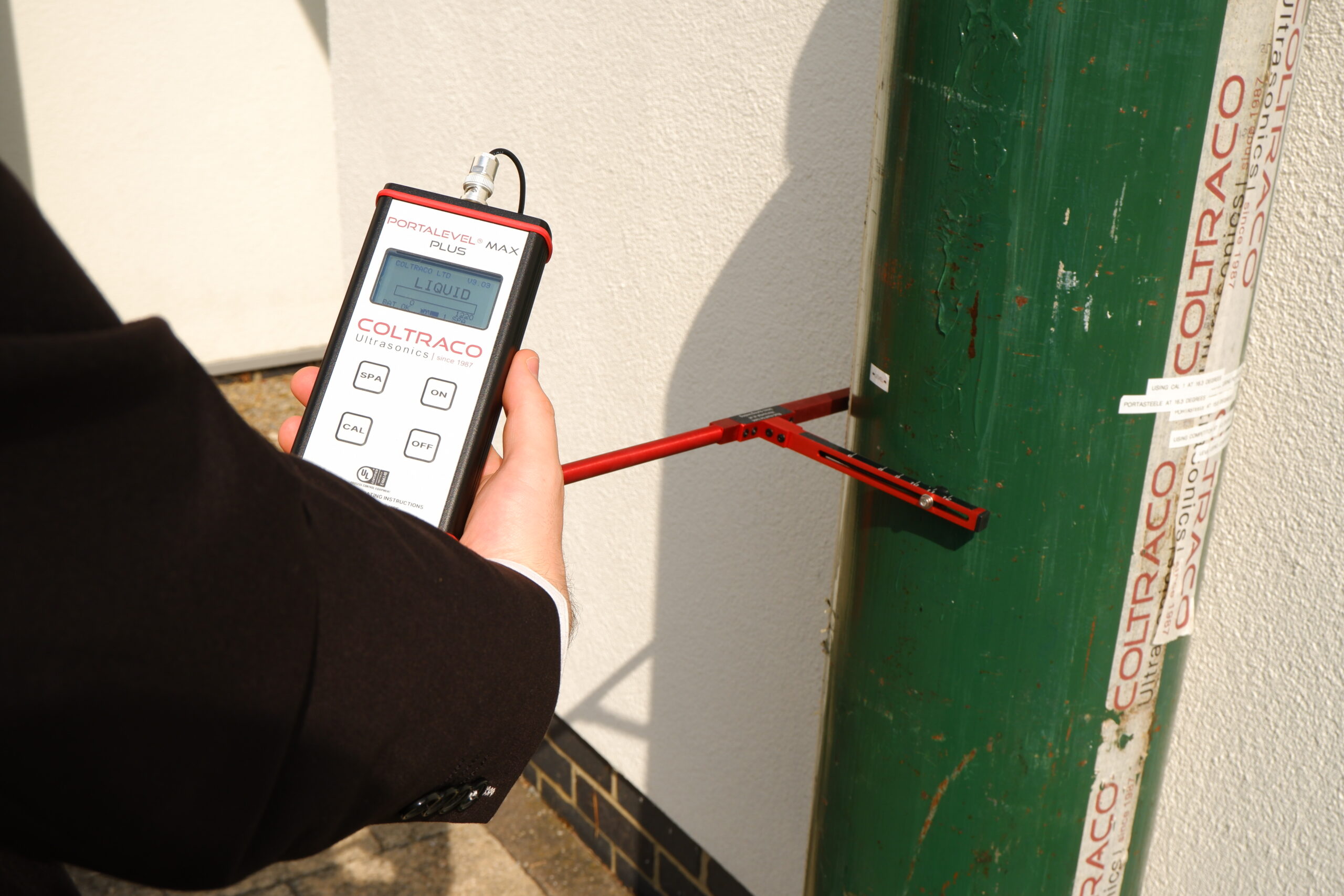
Under IMO SOLAS FSS Code Chapter 5 Clause 2.1.1.3 it is required that “Means shall be provided for the crew to safely check the quantity of the fire extinguishing medium in the containers.” Not all crew members are qualified to dismantle and weigh the cylinders, this makes using an ultrasonic liquid level indicator the perfect tool to give all crew – regardless of station – the confidence and ability to safely and accurately test their CO2 without the need of any dismantling or weighing.
The Portalevel® MAX MARINE PLUS is Coltraco Ultrasonics flagship handheld liquid level indicator with ABS Type Approval for marine applications. It provides results with an accuracy of ±1.5mm of the true liquid level in under 30 seconds. Supplied with an ultra slim extension rod, the Portalevel® MAX MARINE PLUS allows a single operator to test an entire bank of cylinders of varying sizes and agents, with minimal training. This can save as much as 60% of the time required to manually dismantle and weigh a cylinder, making it the ideal, safe testing solution for all crew.
Compliance with international safety standards is non-negotiable, and unfortunate incidents like the Finnmaster fire highlight the importance of functioning and compliant fire suppression systems. Take control of your fire safety inspections today with the Portalevel® MAX MARINE PLUS.


General Fire Safety Measures Aboard Ship
General fire safety measures aboard ship are essential for preventing incidents like the recent cargo ship fire at Albert Dock in Hull, which required a coordinated response from Humberside Fire and Rescue. To minimize the risk of fire and ensure the safety of both crew and vessel, ships must prioritize regular maintenance of all fire suppression systems. This includes routine inspections and testing to confirm that extinguishers, alarms, and emergency equipment are fully operational.
Crew training is another critical component. All personnel should be well-versed in fire response protocols, evacuation routes, and the use of firefighting equipment. Regular drills, conducted in collaboration with rescue services and port authorities, help ensure that everyone on board is prepared to act swiftly in the event of a fire. The use of fire-resistant materials in ship construction, along with strict adherence to hot work permit procedures, further reduces the likelihood of ignition, especially in high-risk areas like the cargo hold.
A comprehensive fire safety plan should be in place, detailing emergency response steps, communication procedures with shore-based agencies such as Humberside Fire and Rescue, and clear evacuation strategies. This plan must be regularly reviewed and updated, with input from both the crew and local emergency service partners. By implementing these proactive measures, ships operating in busy docks like Hull can significantly reduce the risk of fire, protect valuable cargo, and ensure the safety of everyone on board.
Fire Incident Response
The fire incident response to the cargo ship fire at Albert Dock in Hull city centre showcased the rapid and coordinated efforts of Humberside Fire and Rescue Service. When the fire broke out in the cargo hold of a Marshall Islands-registered bulk carrier carrying 3,500 tonnes of scrap metal on Friday morning, the fire service immediately mobilized five fire engines and an aerial ladder platform to the scene. Fire crews worked tirelessly throughout the day and night, facing the challenge of a deep-seated fire within the cargo hold that produced large plumes of smoke visible across Hull city.
The fire and rescue service’s control room staff played a crucial role in managing relief crews and ensuring a continuous response, while the fire service spokesperson kept the public informed about the evolving situation. The strong smell of smoke prompted warnings for residents and businesses in the city centre, including Kingston Retail Park, to stay indoors and keep windows and doors closed as a precaution. Hull City Council supported the evacuation of nearby premises, and partner agencies such as Humberside Police and HM Coastguard provided ongoing support at the scene.
Throughout the incident, fire crews used engines and an aerial ladder platform to access the cargo hold, continuously dampening the tonnes of scrap metal to prevent the fire from spreading further. The coordinated communications between the fire and rescue service, Associated British Ports, and other emergency service partners ensured that the vessel remained safely moored at Albert Dock and that the risk to the wider community was minimized.
By Saturday morning, the challenging day for firefighters and emergency service partners had resulted in the fire being brought under control, with no reported injuries or fatalities. The incident highlighted the importance of robust fire incident response protocols, the value of coordinated action between port authorities and emergency services, and the critical role of modern firefighting equipment in managing ship fires in busy urban docks like Hull.